
Post-Surgical Care
Please read the following information carefully for guidance with both emergency concerns and general concerns.
Below are some videos with extra information.
Videos
*Content Warning: The following videos include real surgical footage, which show blood and medical procedures. Some viewers may find this imagery sensitive. Please proceed at your discretion.
Postoperative Healing Instructional video
What you need to know to best care for your pet after surgery.
*Cat Spay Surgery
This explains the surgical procedure that your female cat will under go.
*Cat Neuter Surgery
This explains the surgical procedure that your male cat will under go.
*Dog Spay Surgery
This explains the surgical procedure that your female dog will under go.
*Dog Neuter Surgery
This explains the surgical procedure that your male dog will under go.
Emergency Guidance
If your pet is experiencing a severe medical emergency—such as active, heavy bleeding from the incision, sudden collapse, or continuous vomiting—do not wait for a callback or text response. Contact the nearest emergency or urgent care veterinary clinic immediately. A list of regional emergency clinics is available on our website under the Emergency Care tab and on your discharge summary.
For all other post-op concerns, questions, or healing checks:
Text or Call Our Dedicated Line: 207-200-4088 (Texting allows for the fastest response time).
What to Include in Your Message/Text:
Your full name and phone number
Your pet’s name
A detailed description of your concern
A clear, well-lit photo of the incision site (if texting)
Response Timeline: A veterinary technician will review your message/photo and respond within 20 minutes. If you have not received a response within 20 minutes, please call or text again.
After-Hours Coverage: Texts or voicemails sent after 8:00 PM will be reviewed the following morning. For immediate assistance overnight, please contact the nearest emergency or urgent care clinic.
Additional Information
-
You must restrict your pet’s activity for the next fourteen (14) days to allow the tissue time to heal and to avoid causing the incision to open. Cats should stay indoors. Dogs should go out on a leash to urinate/defecate and then return inside to rest. Keep the incision site dry; do not bathe or apply topical ointment during the recovery period.
Keep males away from unspayed females for 30 days. Keep females away from unneutered males for 7 days. Be prepared to keep pets separate during the recovery period.
Check the incision site twice daily. Females should have no drainage, while redness and swelling should be minimal.
The incision for male dogs is directly on the scrotum and is left open to allow for drainage. Small amounts of drainage/discharge is normal for up to three days. Too much activity causes increased drainage, so activity restriction is very important.
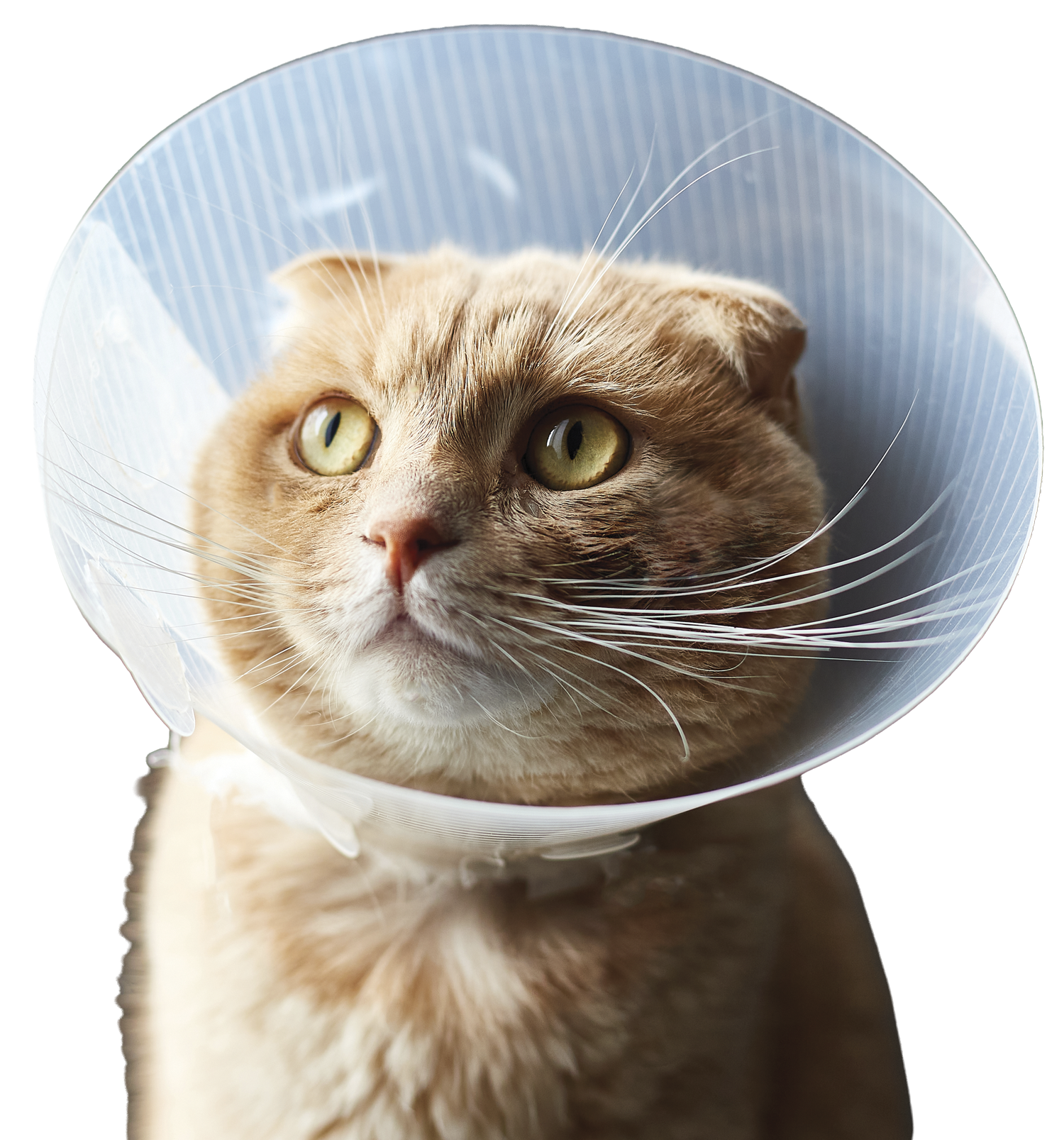
Do not allow the animal to lick or chew at the incision. Dogs MUST wear an Elizabethan collar (cone) or other post-operative protective device to prevent additional licking/chewing that could cause infection. Cats tend to leave their incision site alone and struggle more with cones. We can provide a cone on request, but you may also try a surgical suit, a sock with holes cut in it, or a paper plate with an X cut in the middle for a head opening.
Appetite should return gradually within 24 hours of surgery. Do not change your pet’s diet at this time and do not give them junk food, table scraps, milk, or any other people food during the recovery period. Feeding them their regular diet will help avoid gastro-intestinal upset.
Minimal redness & swelling of the surgery site should resolve within several days, but if they persist longer, please call our emergency phone at (207) 200-4088. You should also contact us immediately if you notice any of the following: pale gums, depression, unsteady gait, loss of appetite or decreased water intake, vomiting, diarrhea, discharge or bleeding from the incision, difficulty urinating or defecating, or labored breathing. If you are unable to reach us immediately, please contact your nearest emergency clinic.
Do not give human medication to pet. It is dangerous & can be fatal.
Two of the most common, normal occurrences after a spay or neuter surgery are the development of seromas or suture reactions. While they can look a bit alarming, both are simply part of the body's natural healing process.
Here is how to tell them apart and know what is normal:
-
What is it?: A harmless pocket of fluid (like a blister under the skin) where tissue was removed.
When it appears: Usually within the first few days after surgery.
The Feel: Soft, squishy, or like a small water balloon. It keeps its shape when gently pressed.
The Temperature: Normal body temperature (not hot).
The Pain: Painless. Your pet should not mind you gently touching the area.
-
What is it?: The body's mild inflammatory response as it absorbs the internal stitches.
When it appears: Usually takes 5 to 10 days before it appears.
The Feel: Firm tot he touch, but otherwise identical to a seroma
The Temperature: Normal body temperature (not hot).
The Pain: Painless. Your pet should not mind you gently touching the area.
-
Strict Rest: Keep your pet calm and quiet (no running, jumping, or rough play). Excessive movement pumps more fluid and tension into the healing area, making these lumps larger.
Keep the Cone On (Dogs): Make sure your pet wears their E-collar 24/7. Licking introduces bacteria, which can turn these harmless lumps into a painful infection.
-
While both of these lumps are safe to monitor at home, please call our emergency line immediately if you notice any of these warning signs:
Heat or Redness: The lump feels hot to the touch or looks very red and irritated.
Pain: Your pet whines, flinches, or tries to pull away when you gently touch the area.
Discharge: There is fluid, blood, or pus oozing or dripping from the incision.
Opening: The incision edges are beginning to pull apart.
-
If the Animal received a vaccine at our clinic other than rabies, please discuss a “booster” vaccine with your regular veterinarian or schedule with our staff for a booster appointment here. Canine distemper/parvo vaccine & feline distemper vaccine all need to be “boostered” three to four weeks after administration of the first vaccine for maximum effectiveness.
-
Some animals get an upset stomach after anesthesia. If your pet develops diarrhea, vomiting, or inappetence, please try the following steps. If these steps don’t help then please let us know!
Pepcid/famotidine: This antacid comes in 20mg tablets or a liquid form of 20mg/ml. It can be given to your pet once or twice daily.
Cats can be given 5mg (¼ tablet or 1/4ml)
Dogs up to 20lbs get 5mg (¼ tablet or 1/4ml)
Dogs 20-60lbs get 10mg (½ tablet or 1/2ml)
Dogs over 60 lbs get 20mg (1 tab or 1ml)
(1ml is the same as 1cc)
-
You can purchase or make a bland, low fat, easily digestible diet for your pet to feed them for a few days if they are vomiting or have diarrhea. Start with small frequent meals (1 tablespoon), then gradually add in their food over a few days once symptoms have resolved.
Examples of a bland diet:
Chicken or turkey baby food mashed up with boiled white rice, cream of wheat, or baby rice cereal
Boiled chicken or hamburger (skim off the fat) mashed up with boiled white rice, cream of wheat, or baby rice cereal
If you are unable to cook, you can try a can of low fat or sensitive stomach canned food, or straight baby food, but it really helps to add in a bland starch, such as white rice
We will make every reasonable effort to treat your pet at Maine Animal Health Alliance, at minimal cost, for any post-operative complications resulting directly from the surgery, if the above post-operative instructions are followed in full. Your regular veterinarian must address illnesses or injuries that are not a direct result of surgery.